
Huntingdon County Arrest Records and Court Charges
Arrest records begin with the law-enforcement event and any booking or custody information. In Huntingdon County, the county prison does not provide the same type of broad online county jail roster that some larger jurisdictions publish, so custody questions may require direct prison or notification-system channels. Court charge records begin when a criminal complaint, information, citation, or related filing enters the court system.
The distinction matters. Jail and booking detail belongs on the custody side, while the formal charges and charge status appear in court dockets. A person can be arrested, released, charged with several counts, have charges amended, have some counts dismissed, and have other counts resolved by plea or trial. The full outcome belongs in the Huntingdon County criminal court records, while this page follows the arrest-to-charge path.
How to Find Huntingdon County Arrest Records and Charges
Use UJS Case Search for public court-charge information. Search by defendant name, docket number, citation number, complaint number, or OTN. Check Magisterial District Court first for many traffic, summary, preliminary arraignment, and preliminary hearing records, then check Court of Common Pleas when a misdemeanor or felony case has moved forward.
- Open UJS Case Search and select the criminal or Magisterial District Court search path.
- Enter the defendant name, complaint number, citation number, docket number, or OTN.
- Open the case and review the charge list, statute, grading, arresting agency, and docket events.
- Check whether each charge is pending, amended, reduced, withdrawn, dismissed, or disposed.
- Use the Clerk of Courts, DA, prison, or MDJ office for the access channel tied to the missing record.
For the custody side, use the county prison information and Pennsylvania VINE notification channel described in county research. For statewide criminal history, Pennsylvania criminal history record information law controls what may be released and what may be limited or sealed.
How Charges Get Filed After an Arrest
Charges after arrest are not all the same document. Many Pennsylvania criminal matters begin with a criminal complaint in Magisterial District Court. The District Attorney can later file an information in Common Pleas after the case is held for court. Indictment is less central to routine Pennsylvania county practice than complaint and information, but it remains a charging-document concept users may encounter in broader criminal records.
| Complaint | Information | Indictment | |
|---|---|---|---|
| Filed By | Police or prosecutor in the early case | District Attorney after the case moves forward | Grand jury process where applicable |
| Common Use | Arrest, preliminary arraignment, preliminary hearing, and MDJ start | Common Pleas misdemeanor or felony prosecution | Serious or special criminal prosecution contexts |
| Record Value | Shows initial allegations, statutes, and probable cause route | Shows formal charges being prosecuted in trial court | Shows charges approved through grand jury procedure |
Huntingdon County Charge Status and What It Means
Charge status can change several times. A docket may show the original complaint, amended charges, a reduction at plea, dismissal at preliminary hearing, nolle prosequi by the prosecutor, or final disposition after trial. Read the latest docket entries and each count separately. One arrest may produce several charges with different outcomes.
| Status | What It Means |
|---|---|
| Pending | The charge remains open and no final disposition is shown for that count. |
| Amended or Reduced | The charge changed in wording, statute, count, or grading as the case moved forward. |
| Dismissed or Withdrawn | The court or prosecutor ended that count without a conviction on that charge. |
| Nolle Prosequi | The prosecutor declined to continue prosecution of that charge, usually with court processing. |
| Disposed | The count reached an outcome such as guilty plea, verdict, dismissal, or other final action. |
What a Huntingdon County Court Charge Record Contains
Public charge records may identify the court, docket number, offense tracking number, complaint number, arresting agency, statute, offense description, charge grade, date filed, bail, warrant entries, preliminary hearing activity, Common Pleas transfer, plea, disposition, sentence, and financial obligations. The District Attorney's office matters because prosecutor filings shape what charges continue into Common Pleas.
| Field | What It Shows |
|---|---|
| OTN | The offense tracking number linked to the arrest event and criminal filing. |
| Complaint Number | The early criminal case or MDJ filing reference. |
| Statute | The Pennsylvania law section tied to the alleged offense. |
| Grade | Felony, misdemeanor, summary, or other severity label when shown. |
| Arresting Agency | The law enforcement agency associated with the complaint or citation. |
| Status | Pending, amended, dismissed, withdrawn, nolle prossed, guilty, or another outcome. |
Charges vs Convictions in Huntingdon County
Being charged is not the same as being convicted. Arrest records and court charge records can show allegations that never become convictions. Employers, landlords, licensing boards, and official background processes may treat charges, dismissed counts, limited-access records, and convictions differently under applicable law.
| Charge | Conviction | |
|---|---|---|
| Stage | Accusation after arrest or filing | Final outcome by plea or verdict |
| Meaning | Shows what was alleged | Shows legal responsibility for a count |
| Can Change | May be amended, reduced, dismissed, or withdrawn | May be appealed, limited, pardoned, or expunged only through legal process |
Statewide Charge and Criminal History Lookups
Pennsylvania criminal history record information is governed by Chapter 91, including public access, limited access, and clean slate rules. Public UJS dockets should not be used as a substitute for official criminal history. Some records may be limited even when older docket data exists, and expungement or clean slate provisions can affect what public users see.
The Pennsylvania criminal history record information law is directly relevant to arrest records and charges.
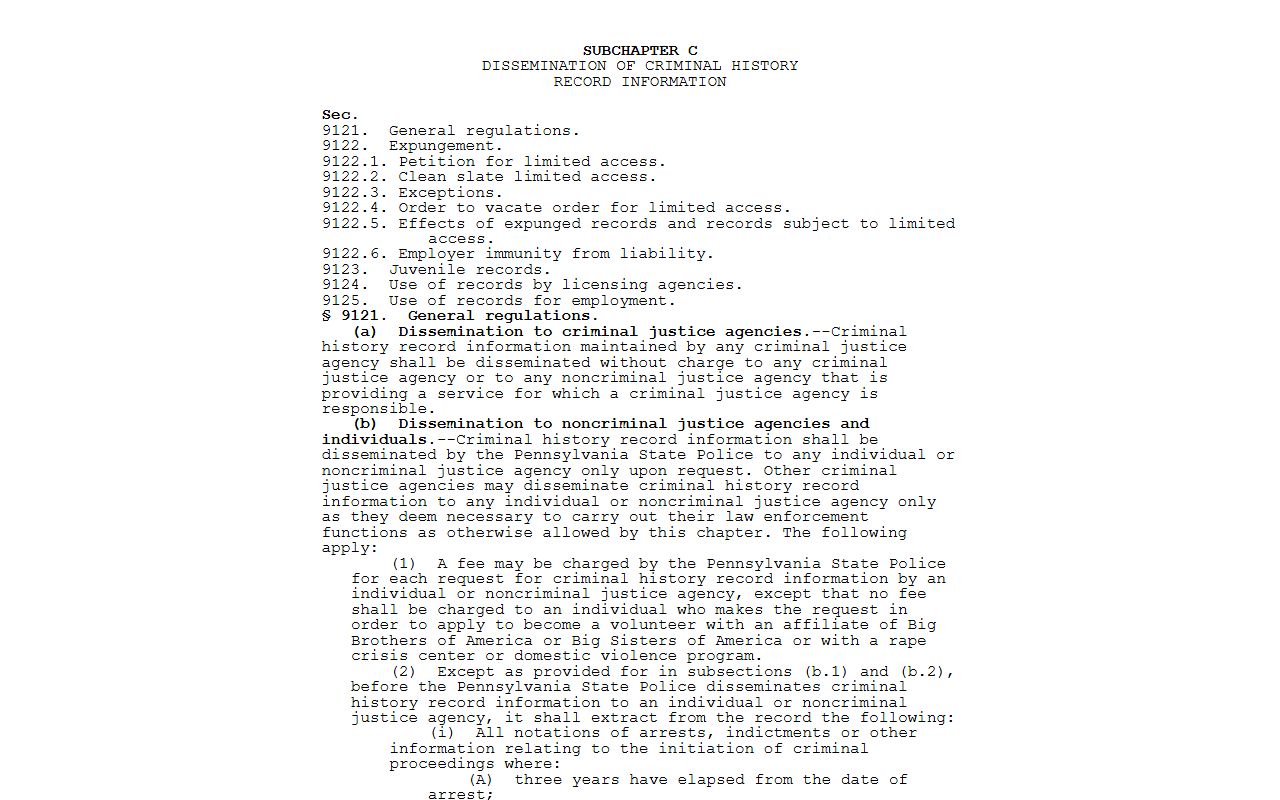
That law helps explain why a court-charge lookup and an official criminal-history response may not show identical information.
Restricted Huntingdon County Arrest Records and Charges
Juvenile cases, sealed charges, expunged matters, confidential victim information, and some investigative records may be restricted. Pennsylvania juvenile court file access is governed by 42 Pa.C.S. section 6307, and expungement is addressed by 18 Pa.C.S. section 9122. A missing public docket result does not prove the absence of an arrest or charge because the record may be restricted, too new, filed under another court level, or listed under different identifiers.
The Pennsylvania juvenile records statute is one reason certain arrest-related court records do not appear in public searches.
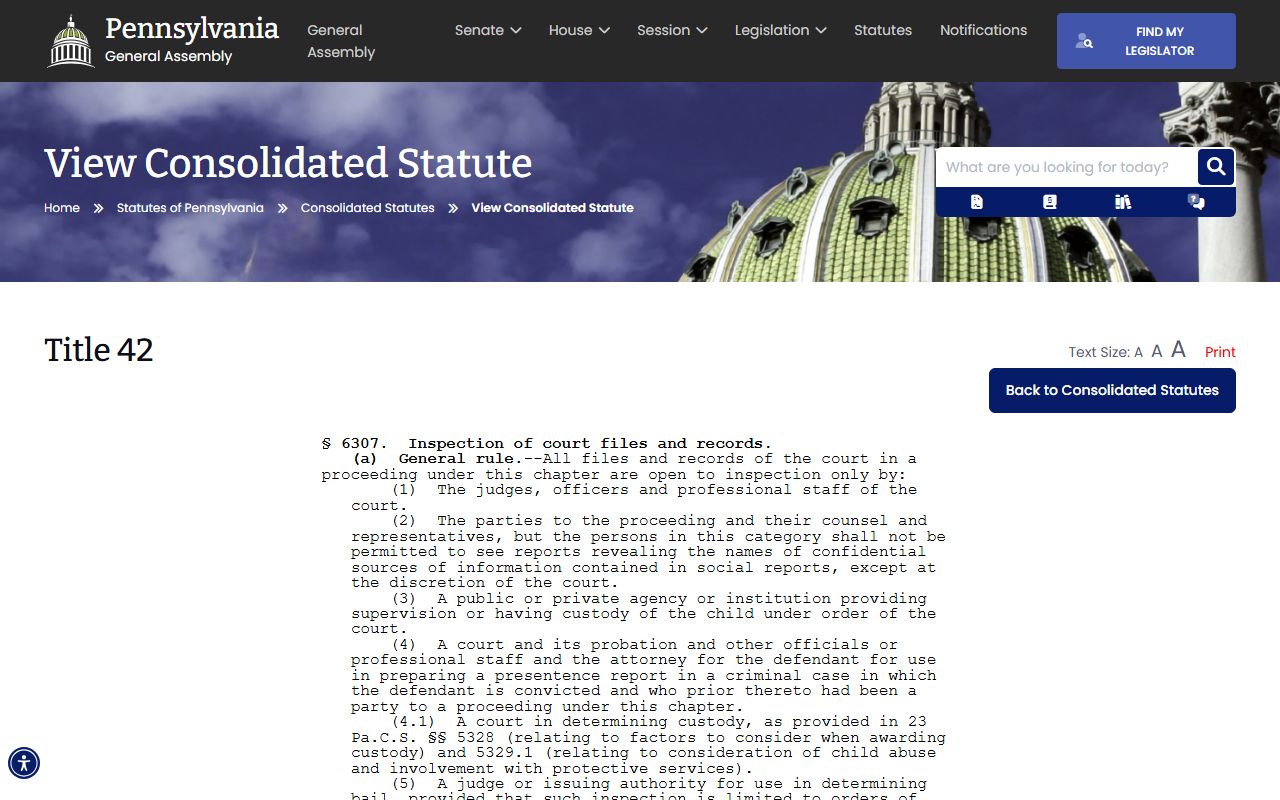
Juvenile access limits are separate from adult criminal docket access and should not be treated as a database error.
Megan's Law and Arrest Record Boundaries
The Pennsylvania State Police Megan's Law registry is not a general Huntingdon County arrest records database. It is a statewide sex offender registry with its own search fields and profile limits. It may be relevant when a person is trying to understand public sex-offender registration information, but it should not be used as a substitute for court charges, criminal court dispositions, jail custody records, or official criminal history.
The Pennsylvania Megan's Law website is the official registry source identified for this topic.
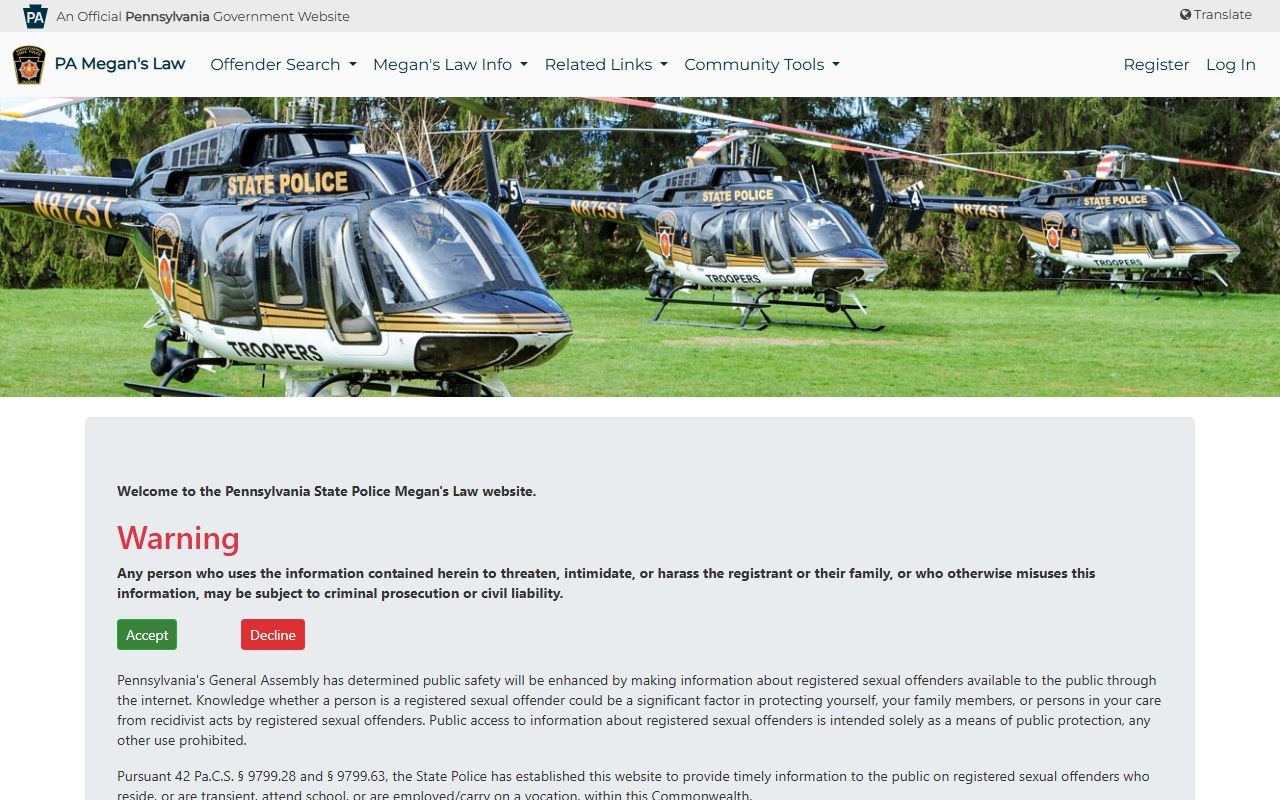
Use the registry only for its specific public-registration purpose, not as a complete arrest or charge history.
Background Check Considerations
Casual court-charge research is different from an FCRA-regulated background check, employment screen, tenant report, licensing review, or official criminal-history request. UJS docket sheets can help identify public case events, but they may be incomplete, delayed, restricted, or legally different from official criminal history. Users who need a legal determination should use the appropriate government office or counsel.
Important: Public court-charge lookups should not be used as consumer reports for FCRA-regulated decisions.